
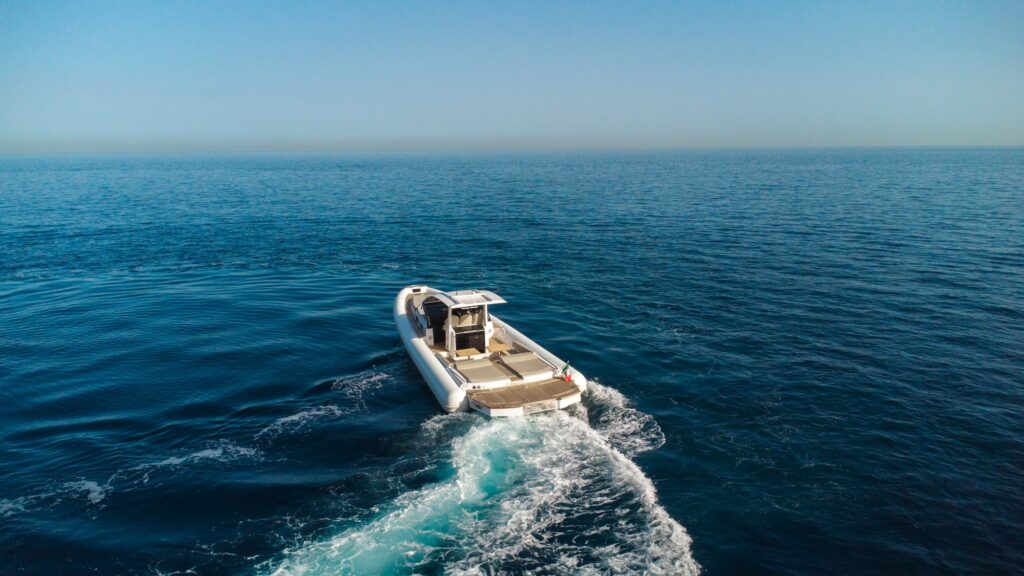
A superyacht is only as free as its smallest boat. The tender in the garage is often too small for six guests, their luggage and a day of water toys, and every trip ashore depends on it. That is why more and more owners and charter guests add a dedicated superyacht chase boat. But which one? Here is a practical guide to choosing the right chase boat – and why renting one is often smarter than buying.
Start from how you will use it
Before looking at brands, list what the chase boat must do every day. Guest transfers to beach clubs and restaurants need comfort, shade and a dry ride. Water sports need a large swim platform and space for toys. Logistics – provisioning, luggage, crew changes – need deck space and range. Many owners want all three, which is why the most popular chase boats today are luxury RIBs and day boats between 10 and 16 metres.
Size and capacity
For a yacht with up to 10–12 guests, a chase boat of 12–14 metres is usually the sweet spot: it carries the whole party in one trip, stays comfortable in a short sea and can still enter small harbours. Under 10 metres the boat becomes a simple shuttle; above 16 metres it starts to need its own crew, berth and logistics like a small yacht.
Speed, range and seakeeping
A chase boat must keep up with the mother ship and still have fuel to spare for the day. Look for a cruising speed of at least 30 knots, a deep-V hull that handles Mediterranean chop, and enough range to follow longer passages – for example from the Aeolian Islands to the Amalfi Coast – without refuelling on the way. Twin engines add redundancy, which matters when the boat is out alone with guests on board.
Comfort: shade, seating and a cabin
Guests judge a chase boat by the ride and the shade. A T-top or hard top, proper seating with backrests and a large sunpad make the difference on a 40-minute transfer. A small cabin with a toilet is extremely useful: guests can change, and on long-term charters the crew can stay on board when needed.
Towing or independent passage
On long passages the chase boat can follow under its own power or be towed by the superyacht. Towing saves crew time but requires a hull with structural tow points. Our own Sea Toy is fitted with structural tow eyes for long-range towing, so she can follow the mother ship and be released on arrival.
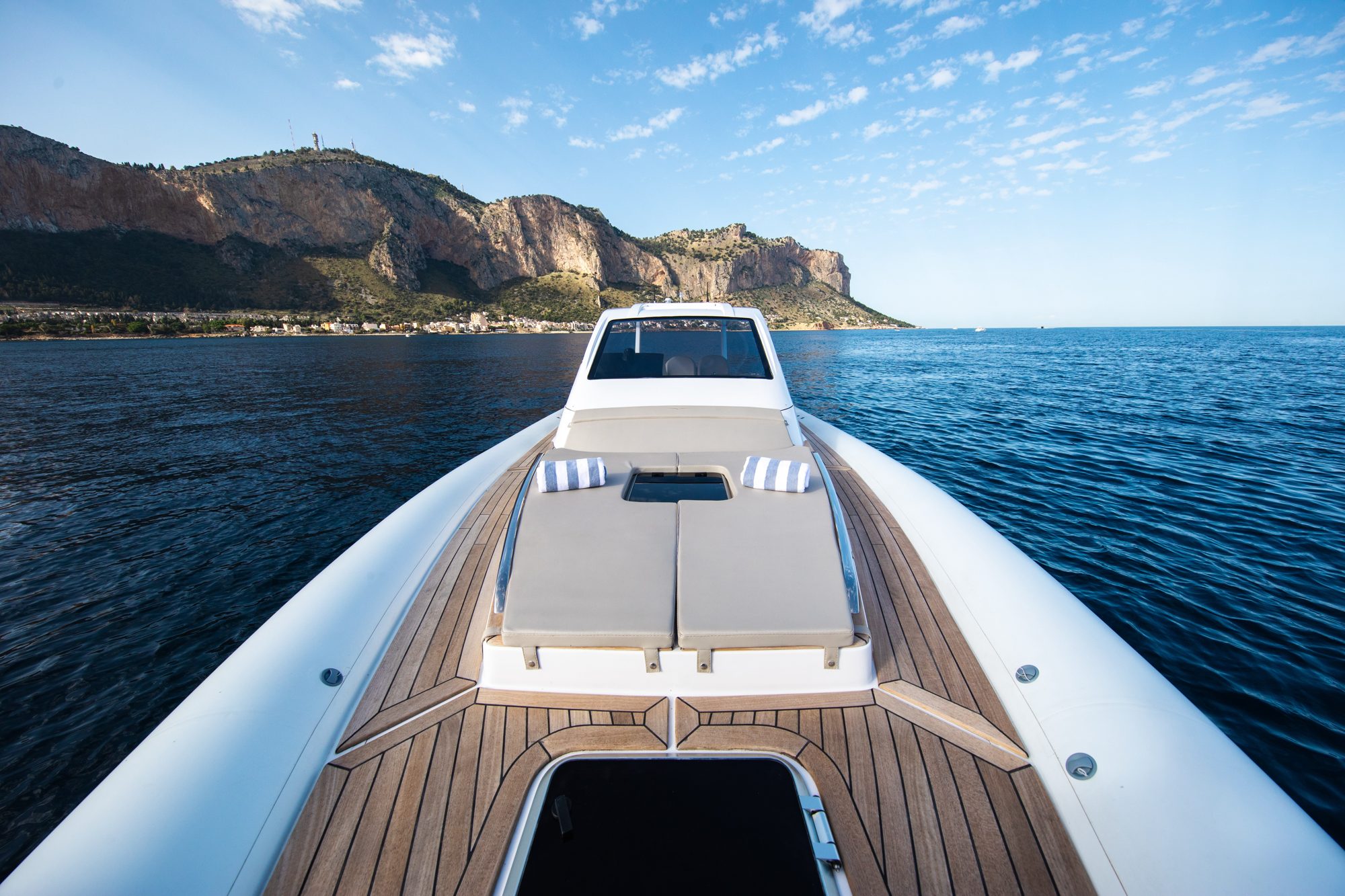 Sea Toy, our Magazzù MX-14 chase boat.
The most popular chase boat builders
There is no single best model, but a few builders appear again and again behind the largest yachts in the Mediterranean:
- Wallytender – the tender line from Wally: unmistakable design, a wide beam and a very dry, stable ride.
- Anvera – Italian high-performance RIBs, fast and sporty, a favourite for guests who love speed.
- Axopar – Scandinavian, versatile and efficient, often chosen when range and practicality come first.
- Pardo – Italian walkarounds from Cantiere del Pardo, elegant and comfortable for long days at sea.
- Technohull – Greek performance RIBs built for speed in open water.
- Magazzù – Italian luxury RIBs with a strong seafaring tradition; our own chase boat Sea Toy is a Magazzù MX-14.
Crew: never an afterthought
A chase boat works alongside the yacht all day and often at night, in busy harbours and close to swimmers. A professional, licensed skipper who knows the local waters and coordinates directly with the yacht’s captain is as important as the boat itself.
Buy or rent?
Buying a chase boat means purchase cost, insurance, maintenance, winter storage and, for yachts that spend the winter in the Caribbean, the expense of shipping it across the Atlantic. That is why many owners now prefer to rent a chase boat for the Mediterranean season: the boat and crew are delivered where the yacht arrives and collected at the end of the summer. Read more about our seasonal and long-term chase boat charter.
How we can help
Tell us the name and size of your yacht, your dates, cruising area and how you plan to use the chase boat. We propose Sea Toy or, through our network, the model that best fits – from a Wallytender to an Anvera – and reply within 8 hours. Contact us.
Frequently asked questions
What size chase boat do I need for my superyacht?
For most yachts with 8–12 guests, a chase boat of 12–14 metres is ideal: large enough for the whole party and comfortable in a short sea, yet easy to berth in small harbours.
What is the difference between a tender and a chase boat?
A tender is carried on board, so its size is limited by the garage. A chase boat travels independently or is towed, so it can be much larger, faster and more comfortable.
Can I rent a chase boat only for the summer?
Yes. Seasonal and monthly rentals are our most requested service, especially for yachts that spend the winter in the Caribbean.
Un superyacht è libero quanto la sua barca più piccola. Il tender nel garage spesso è troppo piccolo per sei ospiti, i bagagli e una giornata di giochi d’acqua, e ogni discesa a terra dipende da lui. Per questo sempre più armatori e ospiti in charter aggiungono un chase boat dedicato. Ma quale scegliere? Ecco una guida pratica per scegliere il chase boat giusto – e perché noleggiarlo è spesso più intelligente che comprarlo.
Parti da come lo userai
Prima dei marchi, elenca cosa deve fare ogni giorno. I transfer verso beach club e ristoranti richiedono comfort, ombra e una navigazione asciutta. Gli sport d’acqua richiedono una grande plancia e spazio per i toys. La logistica – cambusa, bagagli, cambi equipaggio – richiede spazio in coperta e autonomia. Molti armatori vogliono tutte e tre le cose: per questo i chase boat più richiesti oggi sono RIB di lusso e day boat tra 10 e 16 metri.
Dimensioni e capienza
Per uno yacht fino a 10–12 ospiti, un chase boat di 12–14 metri è di solito la scelta ideale: porta tutti in un solo viaggio, resta comodo con mare formato ed entra ancora nei piccoli porti. Sotto i 10 metri diventa una semplice navetta; sopra i 16 inizia a richiedere equipaggio, ormeggio e logistica propri, come un piccolo yacht.
Velocità, autonomia e tenuta di mare
Il chase boat deve stare al passo con la nave madre e avere ancora carburante per la giornata. Servono almeno 30 nodi di crociera, una carena a V profonda che regga il mare corto del Mediterraneo e un’autonomia sufficiente per seguire i trasferimenti più lunghi – per esempio dalle Eolie alla Costiera Amalfitana – senza rifornimenti intermedi. I due motori aggiungono sicurezza quando la barca è da sola con gli ospiti a bordo.
Comfort: ombra, sedute e una cabina
Gli ospiti giudicano un chase boat dalla navigazione e dall’ombra. Un T-top o hard top, sedute vere con schienale e un grande prendisole fanno la differenza in un transfer di 40 minuti. Una piccola cabina con bagno è utilissima: gli ospiti possono cambiarsi e, nei noleggi lunghi, l’equipaggio può restare a bordo quando serve.
Traino o navigazione autonoma
Nelle traversate lunghe il chase boat può seguire con i propri motori o essere trainato dal superyacht. Il traino fa risparmiare tempo all’equipaggio ma richiede punti di traino strutturali. Il nostro Sea Toy ha golfari strutturali per il traino a lunga distanza: segue la nave madre e viene rilasciato all’arrivo.
Sea Toy, il nostro chase boat Magazzù MX-14.
I cantieri di chase boat più richiesti
Non esiste un modello migliore in assoluto, ma alcuni cantieri si ritrovano spesso dietro i grandi yacht del Mediterraneo:
- Wallytender – la linea tender di Wally: design inconfondibile, baglio largo e navigazione molto asciutta e stabile.
- Anvera – RIB italiani ad alte prestazioni, veloci e sportivi, per chi ama la velocità.
- Axopar – scandinavi, versatili ed efficienti, scelti quando contano autonomia e praticità.
- Pardo – walkaround italiani del Cantiere del Pardo, eleganti e comodi per lunghe giornate in mare.
- Technohull – RIB greci ad alte prestazioni, costruiti per la velocità in mare aperto.
- Magazzù – RIB di lusso italiani con una forte tradizione marinara; il nostro Sea Toy è un Magazzù MX-14.
L’equipaggio: mai un dettaglio
Il chase boat lavora accanto allo yacht tutto il giorno e spesso la sera, in porti affollati e vicino ai bagnanti. Uno skipper professionista e abilitato, che conosce le acque locali e si coordina con il comandante dello yacht, conta quanto la barca.
Comprare o noleggiare?
Comprare un chase boat significa costo d’acquisto, assicurazione, manutenzione, rimessaggio invernale e, per gli yacht che passano l’inverno ai Caraibi, il trasporto attraverso l’Atlantico. Per questo molti armatori oggi preferiscono il noleggio del chase boat per la stagione nel Mediterraneo: barca ed equipaggio vengono consegnati dove arriva lo yacht e ritirati a fine estate. Scopri il nostro noleggio tender e chase boat stagionale.
Come possiamo aiutarti
Indicaci nome e dimensioni dello yacht, date, area di navigazione e come userai il chase boat. Proponiamo Sea Toy oppure, attraverso il nostro network, il modello più adatto – da un Wallytender a un Anvera – e rispondiamo entro 8 ore. Contattaci.
Domande frequenti
Di che dimensioni deve essere il chase boat per il mio superyacht?
Per la maggior parte degli yacht con 8–12 ospiti l’ideale è un chase boat di 12–14 metri: abbastanza grande per tutti, comodo con mare formato e facile da ormeggiare nei piccoli porti.
Che differenza c’è tra tender e chase boat?
Il tender viaggia a bordo, quindi le sue dimensioni sono limitate dal garage. Il chase boat naviga in autonomia o viene trainato, quindi può essere molto più grande, veloce e confortevole.
Posso noleggiare un chase boat solo per l’estate?
Sì. Il noleggio stagionale e mensile è il nostro servizio più richiesto, soprattutto per gli yacht che passano l’inverno ai Caraibi.
Join Us for the 2027 Season
Our team is already planning the 2027 Mediterranean season: crewed motor yachts, sailing yachts, catamarans, superyachts and chase boats, from our own fleet and a curated selection of partner yachts. Contact us to design your ideal charter.
Request Availability